“How did you find these games that I’ve never heard of?!”
This is a question Shen—a hardcore fan of horror, psychological, and puzzle games—gets from friends all the time. Lately, they’ve been sinking hours into the roguelite puzzle game, Blue Prince.
“I actually follow a few creators from fan localisation groups on Bilibili,” Shen explains.
“They have great taste in indie titles. I love watching their recommendation videos to discover my next game, because I don’t have many friends in real life with similar tastes. But in their QQ group chats, I feel like I’m part of a real community.”
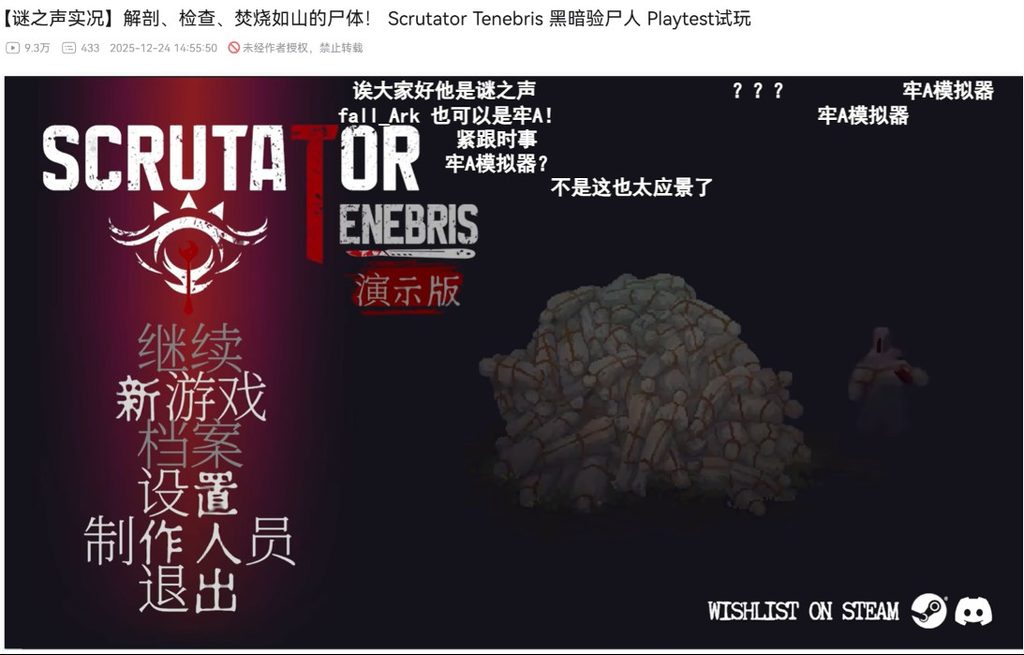
A Bilibili creator followed by Shen, known for discovering niche titles and localising Slay the Spire.
Shen’s words highlight the fact that game discovery in China is happening in a unique ecosystem.
Shen represents one persona within the broader community of hardcore Chinese PC gamers: the player who may not have a large social circle in real life (most of them are either introverts or busy professionals, or both), but is willing to spend spare time—and money—on games discovered through trusted online communities.
Game Marketing in China Differs from the West
For most global game studios, the discovery pipeline feels second nature:
👉 Launch trailers on YouTube, share devlogs on X, facilitate discussion on Reddit, reach out to Twitch streamers, and gather feedback on Discord.
It is almost like a linear machine driving traffic towards Steam wishlists.
Many studios assume that once their game hits Steam, global players—including those in China—will discover it through the same storefront algorithm and localised store copy.
Unfortunately, that assumption overlooks an astonishing reality.
According to Valve @GDC 2025 (as reported by GameDiscoverCo), Simplified Chinese became the #1 primary language on Steam, reaching 33.7% of all user accounts, slightly surpassing English (33.5%).
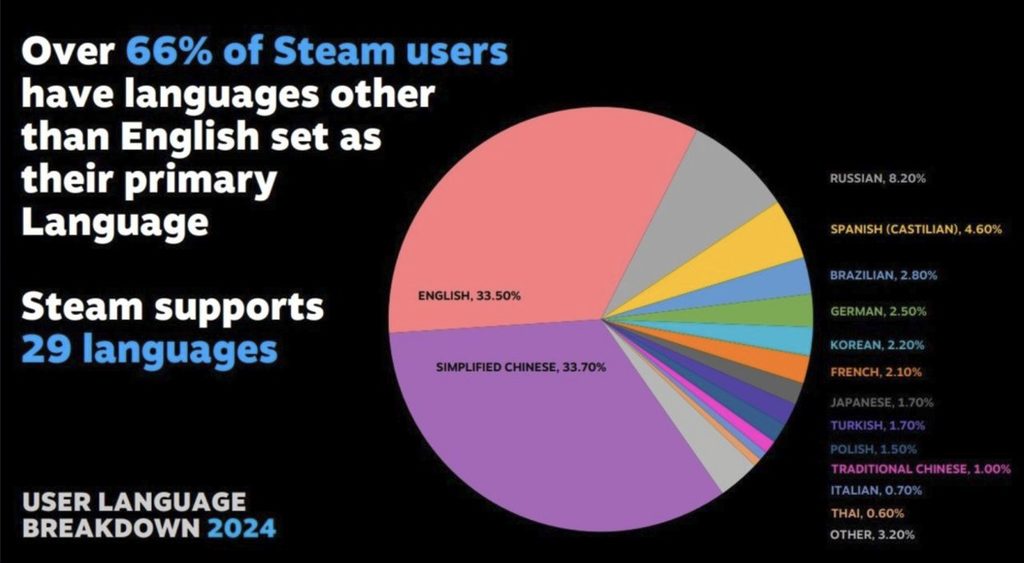
Steam user language breakdown 2024. Image by GameDiscoverCo.
Chinese users make up a substantial portion of Steam’s player base. Meanwhile, YouTube, Twitch, Reddit, Discord and X are blocked or difficult to access from mainland China.
Although some Chinese players can use tools to access global channels, the added friction makes them less convenient for discovery and communication.
So, how do millions of Chinese PC players discover new games?
They do not necessarily browse Steam in isolation, and often move between Steam and a parallel local digital ecosystem made up of social and community platforms.
The 1:1 Mapping Trap
When global studios first look at Chinese social media for games, the temptation is to build a mental translation key, for example:
Mental Translation Key
- NGA and Baidu Tieba look like Reddit.
- Bilibili is basically China’s YouTube.
- Douyu and Huya are just like Twitch.
- Douyin is just China’s TikTok.
While these comparisons aren’t entirely wrong on a surface level, relying on them creates a dangerous blind spot.
If you treat these local channels as the alter ego of global platforms and simply repost global content in Chinese, your corporate broadcasting can easily get lost in China’s high-volume social media environment.
Winning over Chinese players means finding seed users (your first engaged players) and designing content that feels native to each platform.
Depending on your game’s genre, your Chinese players are not necessarily browsing broad landing pages. Across China’s online platforms, they may be:
👉 Following indie-focused creators (not necessarily macro or mega influencers) and communities on Bilibili that are good at discovering hidden gems.
👉 Chatting in a private fan group (水友群 shuiyou qun, a chat group for a streamer’s followers) or a Tencent QQ channel (a private group chat).
👉 Discussing genre mechanics on specialised forums like NGA (a forum for highly engaged PC players) or Baidu Tieba (popular topic-based forums).
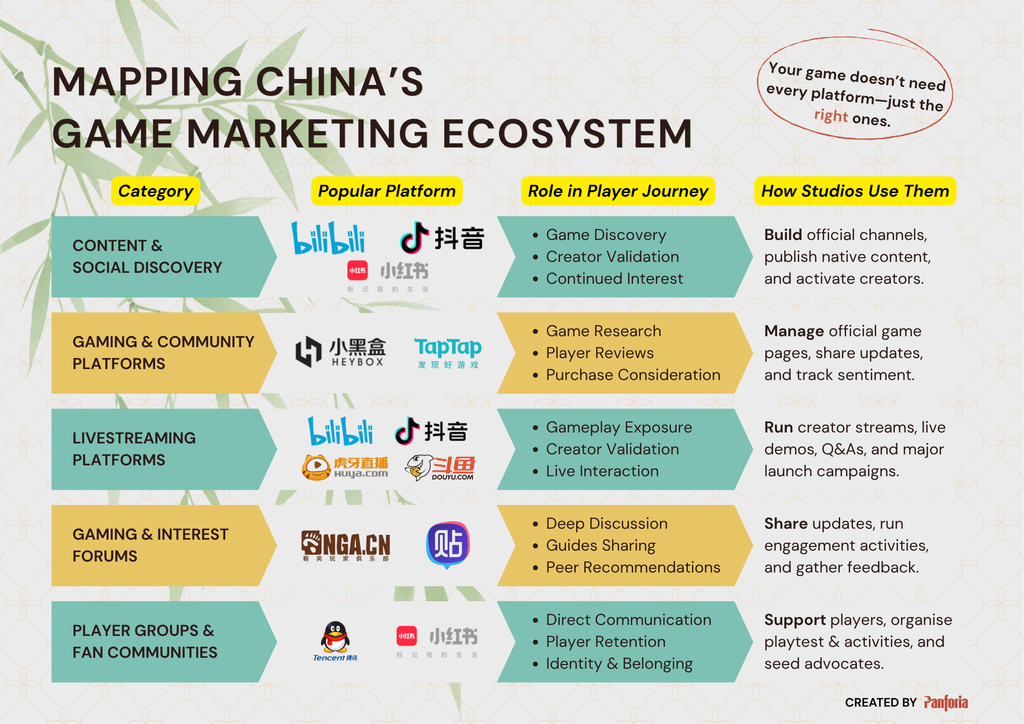
We mapped out China’s popular channels, their roles in the player journey, and how game studios often use them.
Universal Logic with a Local Twist
If China’s digital ecosystem feels overwhelming, take a deep breath with me (inhale and exhale). The same core marketing principles still apply—but their local execution matters.
1. Cultivate Your Seed Community
In our experience, Chinese players are very curious about the minds behind the games they enjoy.
Open studio communication—and a genuine willingness to listen and respond to player feedback—can go a long way toward building trust with local audiences.
The key is to maintain an active presence on the social platforms where players gather and invite interested players to join a dedicated QQ community, enabling deeper engagement.
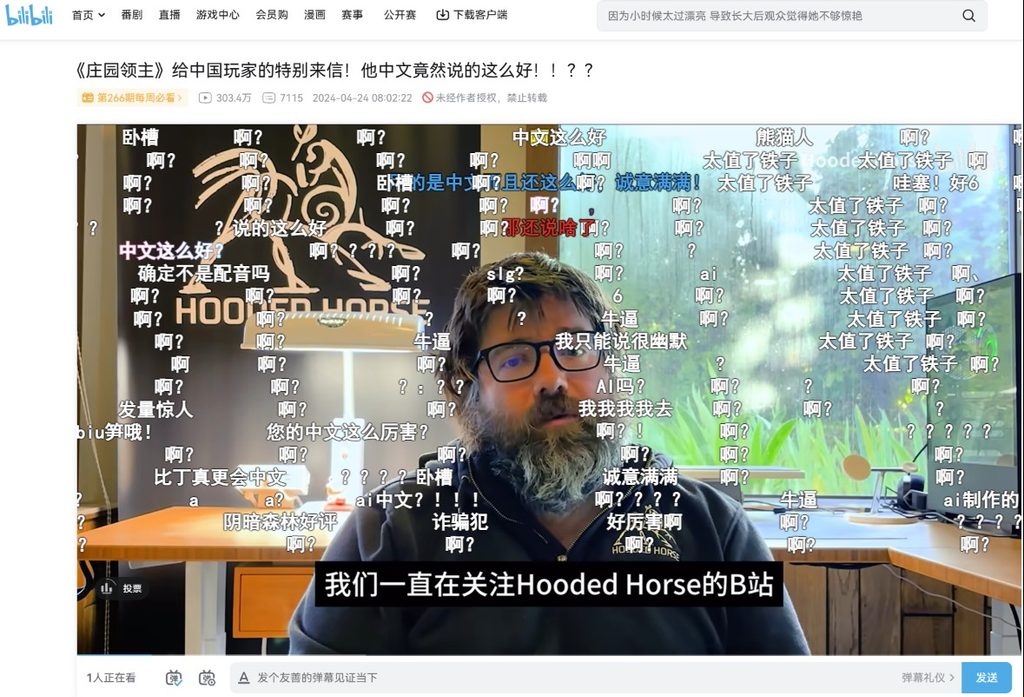
A video of Tim, CEO of Hooded Horse, greeting Chinese players in Mandarin quickly went viral online.
2. Dive Deep into Various Player Communities
Once you have a validated core, expand into channels that fit your game and appeal to wider audiences.
For mid-to-hardcore PC games:
Focus on Steam-heavy hubs like HeyBox (a game-focused discovery and community platform) and specialised forums like NGA, alongside relevant creator and media coverage.
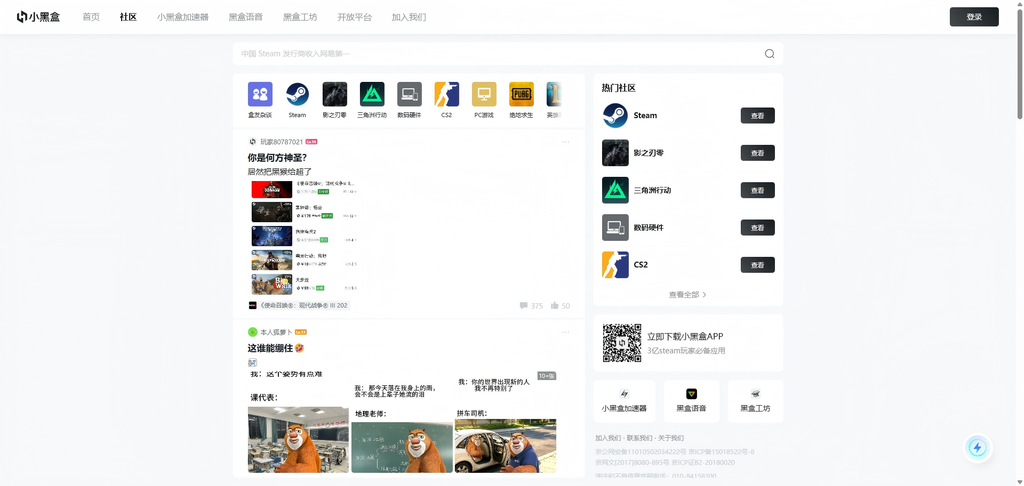
I took a screenshot of the community page on Heybox.
For narrative, puzzle, point-and-click, and cozy games:
Xiaohongshu (RedNote) could be your best friend. Aesthetic, story-led, and shareable content performs very well. Female gamers also tend to be more active here.

Xiaohongshu has also been highly active in the offline gaming event space since 2021.
Your core hub—Bilibili—can support ongoing discovery and player engagement.
Bilibili is a major video and creator platform for gaming. Establish official accounts here, and most importantly, avoid sounding too corporate.
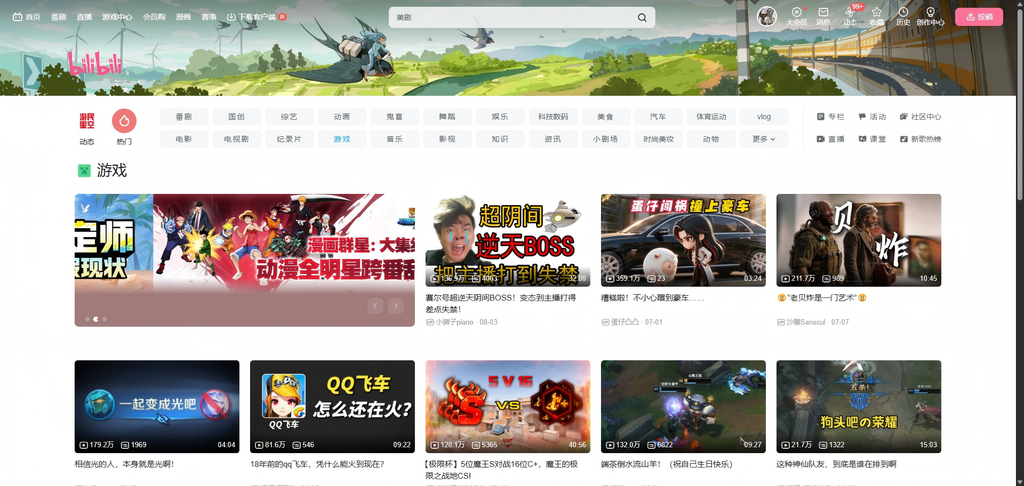
Bilibili is often the first stop for global studios entering the Chinese market.
Chinese players often respond better to a genuine social-media persona (人设 ren she, a recognisable public-facing identity).
Feed updates regularly, work with local creators, and engage with players in the comment section.
3. The Mass Media Trap: When Does Douyin Really Work for You?
A common misconception among global studios is that every China campaign needs a massive Douyin push simply because it has the country’s largest daily active user base.
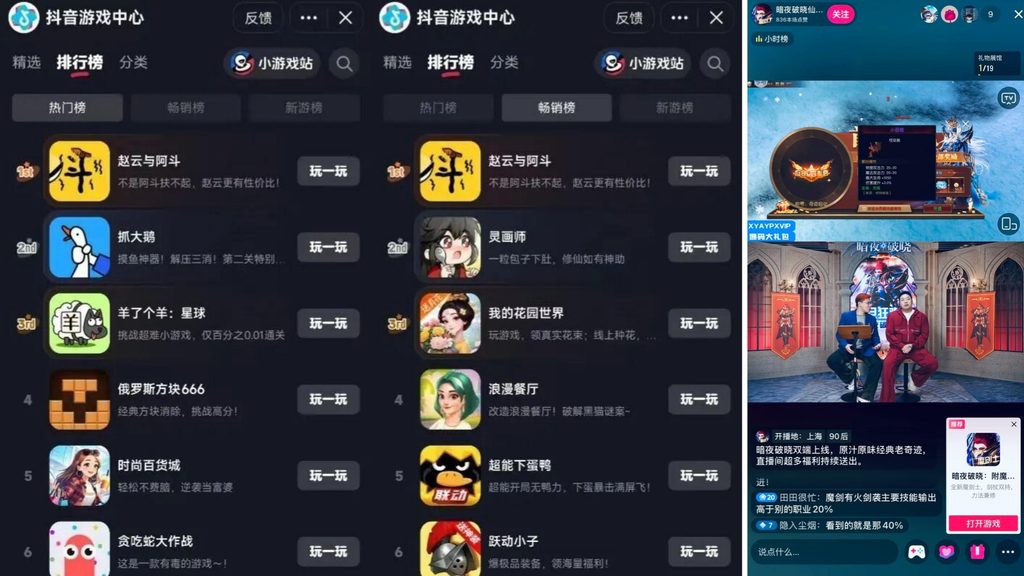
The majority of Douyin’s gaming audience consists of mobile gamers, which has led the platform to develop its own in-app game centre.
The reality?
Mass reach does not automatically translate into Steam conversions.
Pouring budget into broad SFV (short-form video) campaigns is likely to deliver poor results for premium PC titles—especially those without a strong, naturally shareable social hook.
At key launch stages, to acquire a broader audience beyond core players, Douyin can act as the megaphone, amplifying content ideas that have already shown signs of working.
Once exposed to viral clips on Douyin, some interested players may search for reviews on HeyBox and discussions on game-specific forums like Baidu Tieba.
They may then watch more Bilibili content, check Chinese localisation support and reviews on Steam, play the demo and add it to their wishlist.
Some players who really like the game will then join its dedicated QQ community, if one is available.
From Game Discovery to Steam Wishlists
Chinese PC players are not waiting in one place. They move between creators, communities, forums and Steam.
What looks fragmented from the outside becomes a map once you understand the ecosystem.
Your Steam page is the destination, not the discovery strategy.
Reaching Chinese players means joining the conversations that lead them there—with platform-native content, genuine communication, and a clear understanding of the communities that matter to your game.
Not every game takes the same route into China, but every game needs to understand the route its players already take.
Panforia helps global studios turn local discovery into Steam wishlists. Get in touch for a complimentary China Market Audit (limited spots).
You focus on making the game, while we focus on demystifying the market.
Together, we make the perfect team.
Written by Patrick | Edited by Su